Agrowłóknina to materiał okrywowy szeroko stosowany w ogrodnictwie, architekturze krajobrazu i rolnictwie do ograniczania wzrostu chwastów, jednocześnie umożliwiając przenikanie powietrza, wody i składników odżywczych do gleby. Działając jako bariera między glebą a powierzchnią, agrowłóknina pomaga roślinom lepiej rosnąć, jednocześnie zmniejszając nakład pracy i utrzymując ogród lub teren w czystym stanie.
Nie wszystkie agrowłókniny są takie same, a wybór odpowiedniego typu zależy od takich czynników jak czas trwania projektu, rodzaj gleby, pokrycie roślinne, potrzeby drenażu i trwałość.
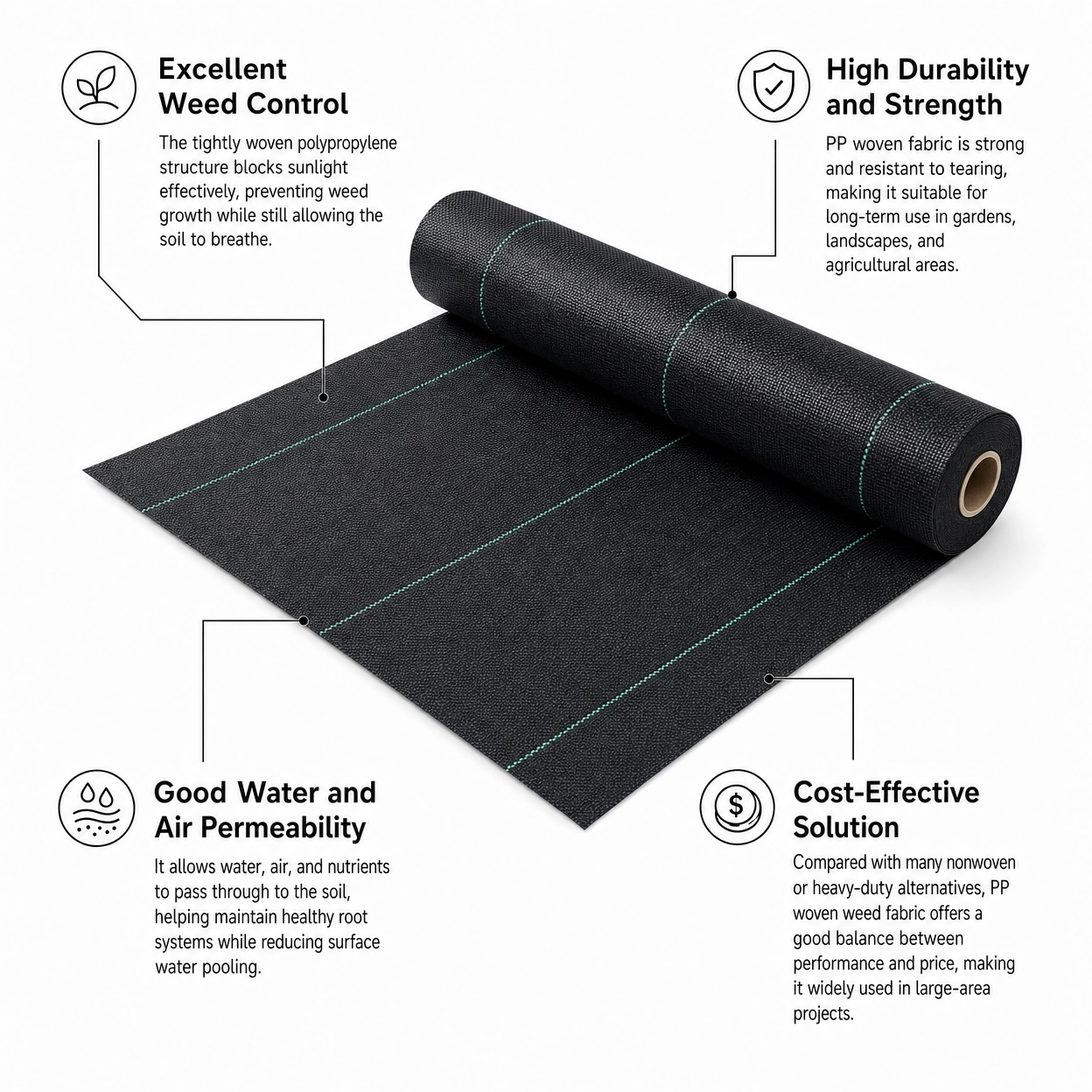
Materiał: paski polipropylenu tkane razem
Cechy: lekka, odporna na promieniowanie UV, łatwa do cięcia, wielokrotnego użytku
Najlepsze zastosowanie: krótkoterminowe projekty, ogrody przydomowe, ścieżki żwirowe, prace DIY w ogrodzie
Zalety:
Niska cena
Łatwy montaż
Wady:
Ograniczona przepuszczalność wody
Może wymagać dodatkowego drenażu
Zalecane zastosowanie: idealna do jednorazowych lub krótkoterminowych projektów, gdzie liczy się ekonomiczność i szybki montaż。
Materiał: włókna poliestrowe i polipropylenowe łączone metodą igłowania
Cechy: wysoka przepuszczalność wody, skuteczne blokowanie chwastów, trwała, ekologiczna
Najlepsze zastosowanie: rabaty kwiatowe, ogródki warzywne, obszary ściółkowane, tereny komercyjnego kształtowania krajobrazu
Zalety:
Zrównoważona wydajność
Oddychająca struktura
Wspiera zdrowy rozwój systemu korzeniowego
Długa żywotność
Wady:
Wyższy koszt niż w przypadku tkanin tkanych
Zalecane zastosowanie: idealna do długoterminowych projektów ogrodniczych i krajobrazowych, oferuje doskonały stosunek jakości do ceny oraz niezawodną kontrolę chwastów。

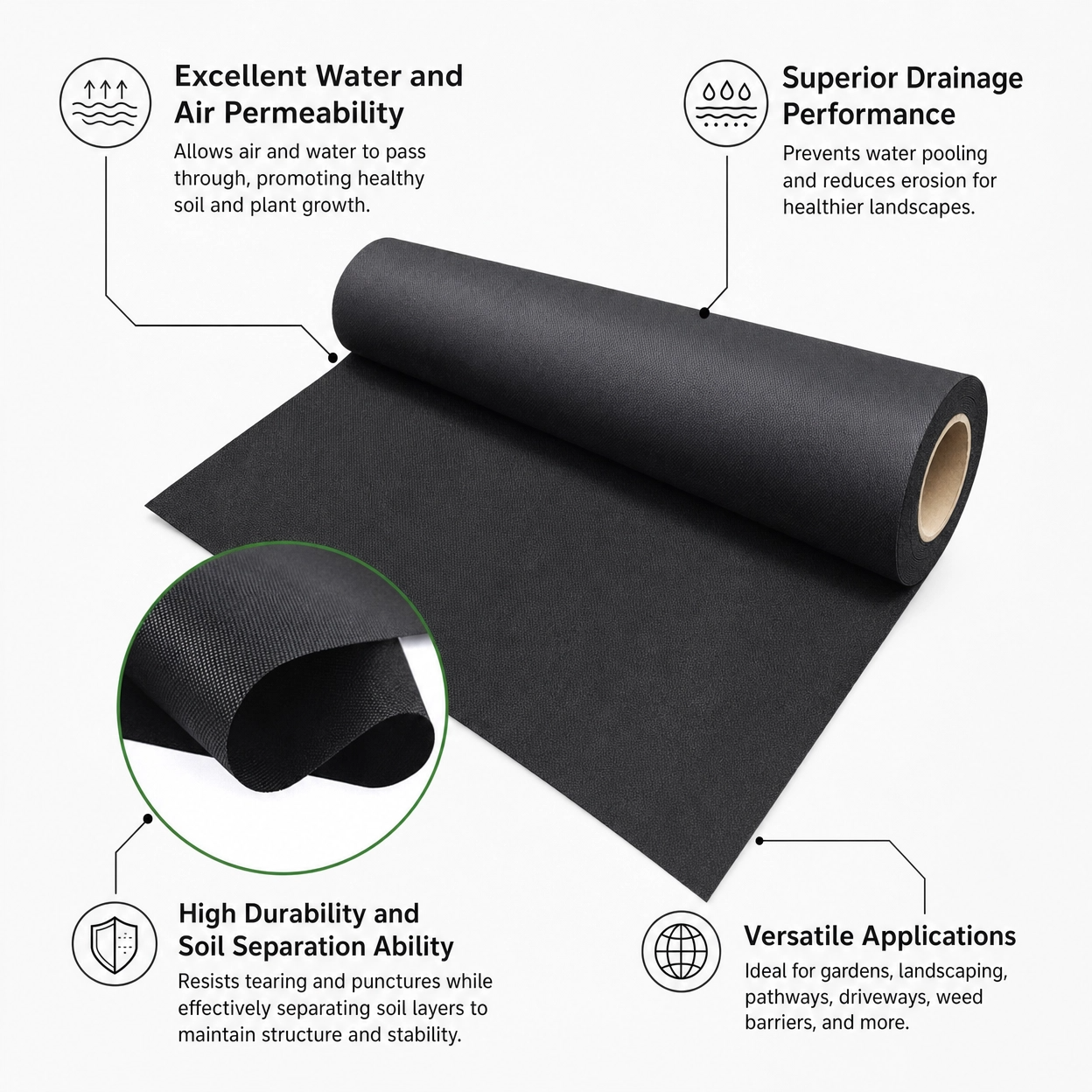
Materiał: włókna polipropylenowe (PP) lub poliestrowe (PET) łączone mechanicznie
Cechy: doskonały drenaż, wysoka przepuszczalność powietrza, duża trwałość
Najlepsze zastosowanie: projekty inżynieryjne, prace budowlane w krajobrazie, systemy drenażowe, szklarnie
Zalety:
Wytrzymuje duże obciążenia
Idealna do stabilizacji gruntu
Odpowiednia do miejsc o dużym natężeniu ruchu
Wady:
Mniej elastyczna w małych ogrodach
Bardziej wymagająca w montażu
Zalecane zastosowanie: odpowiednia do zastosowań inżynieryjnych i budowlanych, szczególnie tam, gdzie kluczowe są drenaż i stabilizacja gleby.
Krótkoterminowe lub jednorazowe zastosowanie → tkana agrowłóknina PP
Długoterminowe zastosowanie → wytrzymała agrowłóknina igłowana
Intensywne opady lub systemy nawadniania → agrowłóknina igłowana lub geowłóknina
Obszary o dużym natężeniu ruchu lub tereny budowlane → geowłóknina
Ogrody przydomowe → wytrzymała agrowłóknina
Do samodzielnego montażu (DIY) → tkane agrowłókniny
Profesjonalne prace krajobrazowe → wytrzymałe agrowłókniny lub geowłókniny
Gęste rabaty kwiatowe lub warzywa korzeniowe → agrowłókniny przepuszczające powietrze i wodę, umożliwiające dostęp składników odżywczych do korzeni
Prawidłowy montaż zapewnia skuteczne działanie materiału w kontroli chwastów. Postępuj zgodnie z poniższymi czterema krokami:
Usuń chwasty, kamienie i zanieczyszczenia oraz wyrównaj glebę.
Rozwiń agrowłókninę na przygotowanym obszarze, nakładając krawędzie o 10–15 cm, aby zapewnić pełne pokrycie.
Użyj metalowych lub plastikowych kotew gruntowych.
Metalowe szpilki w kształcie U są bardziej trwałe.
Plastikowe szpilki (z polipropylenu) są bardziej przyjazne dla środowiska.
Chroni to agrowłókninę przed światłem słonecznym, poprawia estetykę i zapobiega jej przesuwaniu się。

Regularnie sprawdzaj miejsca przy krawędziach i zakładkach, gdzie mogą pojawiać się chwasty, i w razie potrzeby popraw ułożenie tkaniny.
Ponownie uzupełniaj warstwę ściółki, zrębków drewna, żwiru lub kamieni dekoracyjnych, aby utrzymać pełne pokrycie i estetyczny wygląd.
Wytrzymała tkanina przeciw chwastom może służyć przez kilka lat, jednak zastosowanie warstwy ochronnej znacząco wydłuża jej żywotność i pomaga utrzymać ogród w czystym i uporządkowanym stanie.

Wybór odpowiedniej tkaniny krajobrazowej to nie tylko kwestia kontroli chwastów — to także sposób na wspieranie ogólnego zdrowia ogrodu lub terenu zielonego. Dobierając właściwy materiał do projektu, niezależnie od tego, czy chodzi o krótkoterminowe ogrodnictwo, długoterminowe zagospodarowanie terenu czy zastosowania inżynieryjne, można zmniejszyć nakład pracy, poprawić warunki glebowe oraz wspomóc wzrost roślin.
Krótkoterminowe / jednorazowe zastosowanie: tkana tkanina PP przeciw chwastom
Długoterminowe / ekonomiczne ogrodnictwo: wytrzymała tkanina igłowana
Budownictwo / drenaż / inżynieria: włóknina geotekstylna
Dobrze dobrana tkanina krajobrazowa sprawia, że ogród lub projekt wygląda estetycznie, pozostaje funkcjonalny i zachowuje dobrą kondycję przez wiele lat.


